
How the Roof Insurance Claim Process Works: What Homeowners Should Know Before They Call
Updated: May 6
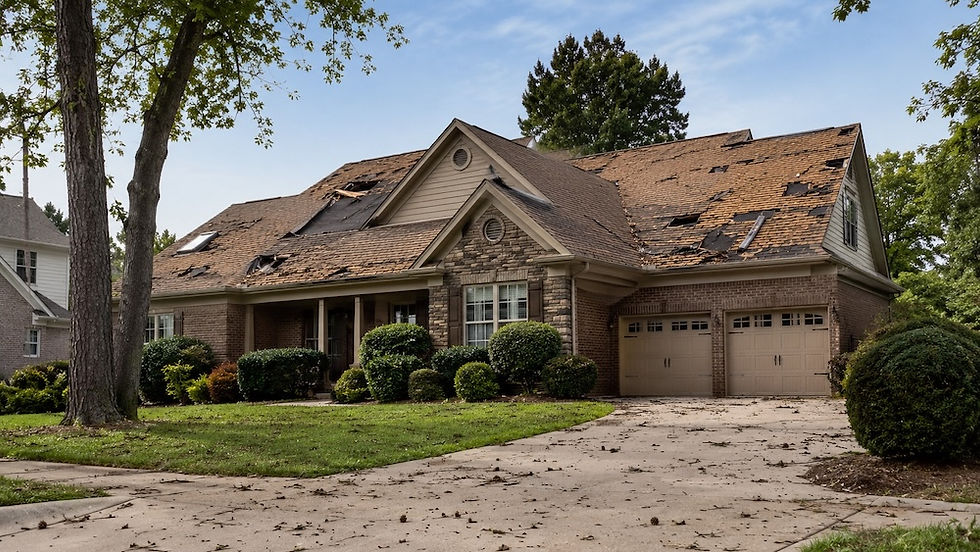
You've just had a storm. Wind, hail, or fallen debris damaged your roof. The next thought is usually: "Will my insurance cover this?"
The insurance claim process can feel overwhelming, especially if you've never filed one before. Here's what to expect at each stage, so you can move through it with confidence and clarity.
Step 1: Document the Damage Immediately
The moment you suspect roof damage, take action. Take photos and videos of all visible damage — both close-up shots and wide angles that show the damage in context. If it's safe to do so, photograph damaged areas from multiple angles. If you can't safely access your roof, don't risk it. Just capture what you can see from the ground.
Create a simple written list of what you observed: date of the storm, type of damage (hail, wind, debris impact), areas affected. This documentation protects you and supports your claim.
Important: Do not start repairs until your claim is assessed. Insurance companies need to inspect damage in its original state. Emergency repairs to prevent further damage are okay (like tarping to stop leaks), but full repairs should wait.
Step 2: Contact Your Insurance Company
Call your insurance company as soon as possible after the storm or when you discover damage. Have your policy number ready. Be clear about what happened and what you're reporting — roof damage from the recent storm, for example.
The insurance company will open a claim and assign an adjuster. They may ask you to provide the photos and documentation you've collected. Some insurers allow you to file claims online or through a mobile app, which can speed up the process.
Ask your adjuster when they can schedule an inspection and what time window to expect them. It's helpful to be home during the inspection if possible, so you can answer questions.
Step 3: The Insurance Adjuster Inspection
The insurance adjuster will conduct an inspection of your roof to assess damage. They'll examine the extent of damage, take their own photos, and prepare a detailed report. This is when having professional roofing documentation helps — if a roofing contractor has already inspected and documented the damage, you can provide that as supporting evidence.
Important: You have the right to have a representative present during the adjuster inspection. Many homeowners choose to hire a roofing contractor or public adjuster to be present. This person can advocate for you if the adjuster's initial assessment seems to underestimate damage.
After the inspection, the adjuster prepares an estimate and sends it to the insurance company for approval.
Step 4: Receive Your Estimate and Claim Decision
Your insurance company sends you an estimate for repairs. This is not a final bill — it's the insurance company's estimate of repair costs. Review it carefully. If you believe the estimate is too low, you can dispute it. This is where a contractor's independent assessment matters. If a roofing company gives you an estimate that exceeds the insurance estimate, you can submit that to your insurer for reconsideration.
Your policy deductible applies to the claim. For example, if the estimate is $10,000 and your deductible is $1,000, you pay the deductible and insurance covers $9,000 (minus any depreciation applied).
Step 5: Begin Repairs and Track Expenses
Once the claim is approved, you can hire a contractor to begin repairs. Keep all receipts and invoices. If actual repair costs exceed the insurance estimate, you may be able to file a supplemental claim for the difference, especially if you discover additional damage once work begins (common with hail damage once shingles are removed).
If your insurance company provides payment directly to you, you're responsible for ensuring the contractor completes the work. If they pay the contractor directly, make sure there's a clear understanding between you and the contractor about scope of work.
The insurance claim process doesn't have to feel like a burden. Understanding each step and having professional support — both from your roofing contractor and, if needed, an independent adjuster — makes it smoother. If you've experienced storm damage and aren't sure where to start, contact us. We'll inspect your roof, document damage, provide you with an independent estimate, and guide you through the claim process. Let us handle the complexity while you focus on protecting your home.


Comments